Not sure what to bring on your first paddle? This kayaking gear checklist for beginners starts with Canada’s legal must-haves: a fitted lifejacket, whistle, 15 m heaving line and bailer. Extras come after.
For wider kit advice, see the guide to the best outdoor gear for vancouver weather.
| Item | Value |
|---|---|
| Lifejacket or PFD | 1 Canadian-approved per person |
| Buoyant heaving line | At least 15 m |
| Bailer | Holds at least 750 mL (three cups), or carry a manual bilge pump |
| Boating drowning victims not wearing a lifejacket | More than 90% in Canada |
| Flares | Not required where you can never be more than 1 NM from shore |
The figures come from Harbour Chandler’s guide to paddle-craft safety gear and Mustang Survival’s post of May 18, 2026. Rules and figures can change, so check the source and Transport Canada before you rely on them.
What Canadian rules say you must carry
Human-powered craft such as kayaks fall under Transport Canada’s Small Vessel Regulations. According to Mustang Survival’s post of May 18, 2026, safety gear must be Canadian-approved, in good working order and easy to reach in an emergency. The same post says the rules apply whether you own, rent or borrow the boat.
For typical open-hull kayaks, Harbour Chandler’s guide lists this kit:
- One Canadian-approved PFD or lifejacket per person
- A buoyant heaving line of at least 15 m
- A bailer or manual bilge pump
- A sound-signalling device, such as a whistle or horn
- A watertight flashlight
Sit-on-top and sealed-hull kayaks have a slightly different list. The same guide adds a reboarding device (a ladder, stirrup or loop) unless everyone is wearing a PFD or lifejacket while underway.
The “wear it” shortcut
If every person on a kayak wears a lifejacket, Harbour Chandler’s guide says the only equipment required is a sound-signalling device and a watertight flashlight. The Canada Gazette notice of December 23, 2017 described the same exception for sealed-hull, sit-on-top kayaks. In that notice, the flashlight applied when the kayak is operated after sunset, before sunrise or in restricted visibility.
Your lifejacket is the one item to wear, not stow
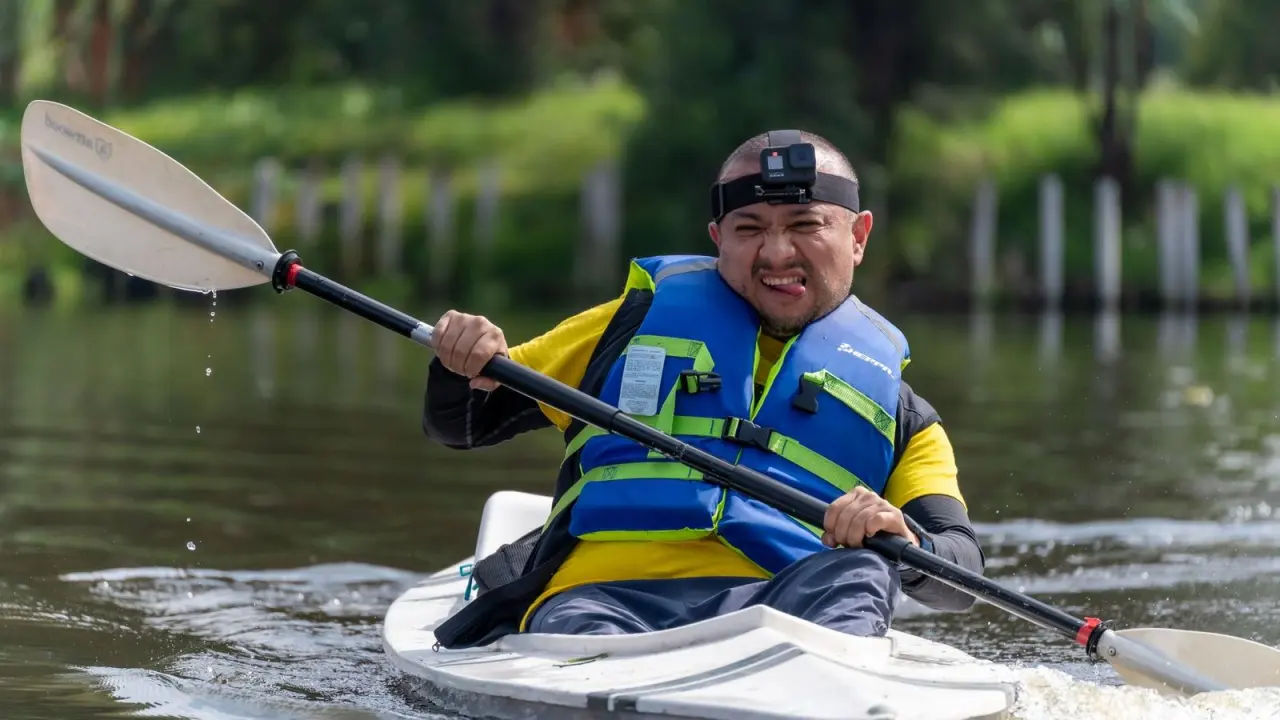
The lifejacket is the centre of any first-timer’s kit. Mustang Survival’s post says you need one for every person on board, with no exceptions. It also reports that more than 90% of people who drown while boating in Canada weren’t wearing a lifejacket, even though they had one on board.
Before you leave the shore, run through this quick check:
- Look for the visible Canadian approval label.
- Fasten it and make sure it fits properly.
- Inspect it for rips, fading or broken buckles.
- Keep it where you can grab it quickly, or better, keep it on.
A jacket buried in a hatch does nothing if you capsize. Put it on at the launch and leave it on until you are back on land.
Kayaking gear checklist: sound, light and rescue items
A whistle costs little and weighs almost nothing, which makes it the easiest legal item to clip to your lifejacket. A watertight flashlight earns its place in the bag too, because Harbour Chandler’s guide says it can stand in for navigation lights on very small craft after dark.
The heaving line is your rescue rope. Mustang Survival says it must float, be at least 15 metres long and be made from a single piece of rope. It is for rescue use only, not for tying up at the dock.
The bailer is how you get water out of an open hull. Mustang Survival says it should hold at least 750 mL (three cups), with a manual bilge pump as the alternative. Whether your boat needs one at all depends on its design, which the FAQ below covers.
Do you need flares on your first outing?
Probably not on a small, sheltered lake or river. Harbour Chandler’s guide says pyrotechnic distress signals are not required on rivers, canals or lakes where you can never be more than 1 NM from shore. It also says craft over 6 m carry six pyrotechnic signals other than smoke.
If you do buy flares, check the date. The Canada Gazette notice of December 23, 2017 says flares expire four years from the date of manufacture. It also noted there were few responsible and accessible options for disposing of expired flares.
Because rules differ by route and craft, confirm your own situation with Transport Canada before a longer trip.
Extras worth packing beyond the legal minimum
Mustang Survival’s post calls the legal list a minimum and says extra gear is a good idea if help might take a while to reach you. The items below are practical suggestions, not legal requirements.
- A spare layer and a towel in a dry bag
- Drinking water and a snack
- Sun protection and a hat
- Your phone in a waterproof case
- A note with your route and return time left with someone on shore
Pack the dry bag the way you would a trail pack, with heavier items low and essentials on top, as covered in how to pack a backpack for camping. If your rain shell has stopped shedding water, read how to wash a waterproof jacket before the trip.
Frequently asked questions
Do I need a lifejacket if I only paddle close to shore?
Show answer
Yes. Mustang Survival’s post of May 18, 2026 says you need one approved lifejacket or PFD for every person on board, with no exceptions. Wearing it is the safer habit.
Do the rules apply if I rent or borrow a kayak?
Show answer
Yes. The same post says it doesn’t matter if you own, rent or borrow the boat, as the rules still apply. Check that the rental includes the required kit.
Does a sit-on-top kayak need a bailer?
Show answer
Not necessarily. Harbour Chandler’s guide says a bailer or pump is not required if the boat cannot hold enough water to capsize or has sealed, non-accessible watertight compartments.
Can a flashlight replace navigation lights?
Show answer
On small human-powered craft under 7 m, Harbour Chandler’s guide says a watertight flashlight can satisfy the navigation-light requirement at night or in restricted visibility.
Do flares expire?
Show answer
Yes. The Canada Gazette notice of December 23, 2017 says flares have an expiry date four years from the date of manufacture and should be replaced, even if unused.